The Electromagnetic Brain
WHAT WE MEASURE — AND WHAT IT MEANS
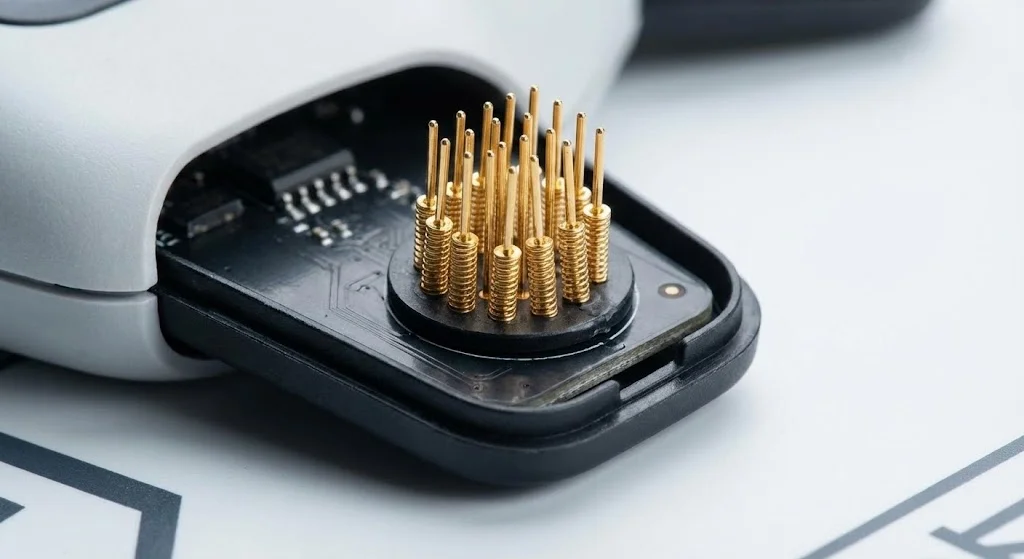
FIG 1.0: DRY ELECTRODE ACTIVE SHIELDING ARCHITECTURE
Neural firing produces two measurable signatures. Electrical potentials propagate through the skull and scalp, arriving as microvolt-scale signals detectable by EEG. Spatial resolution: approximately 2–3 cm.[3]
Magnetic fields from neural currents pass through the skull with less distortion. Conventional MEG requires superconducting SQUID sensors at 4 Kelvin. Not wearable.
Optically Pumped Magnetometers
OPMs measure magnetic fields by monitoring the spin precession of rubidium-87 atoms. Sensitivity: below 10 femtotesla. Operating temperature: room temperature. The Brainwave Systems OPM miniaturization program has achieved 4 mm sensor cells at 12 fT/√Hz sensitivity. Mirror coatings deposited by Vapor Vacuum at 10−9 torr enable multipass optical cavities.[4]
The Biofield
The heart generates the body's strongest electromagnetic field: approximately 50–100 pT at 1 meter distance (measurable by SQUID magnetometry). Studies have detected cardiac-frequency signals in nearby individuals' EEG recordings, suggesting electromagnetic coupling at close range. This work has been reported primarily by the HeartMath Institute; independent replication in peer-reviewed neuroscience literature remains limited. The proposed mechanism — electromagnetic field coupling between biological oscillators — is physically plausible but awaits systematic replication with blinded protocols and larger sample sizes before it can be treated as established.[5]